.svg)
.svg)


.svg)
.svg)


If you've ever wondered why your teeth seem crowded, why you struggle with breathing through your nose, or why your smile doesn't feel quite right, you might be dealing with a narrow palate. This condition is far more common than most Canadians realize, and the good news is that effective treatments exist for patients of all ages, including adults.
At Chagger Dental, we regularly help patients throughout Canada understand their palatal anatomy and explore treatment options that can genuinely transform their oral health, facial aesthetics, and quality of life. In this comprehensive guide, we'll walk you through everything you need to know about narrow palate, from recognizing the symptoms to understanding your treatment choices.
What Does It Mean to Have a Narrow Palate?
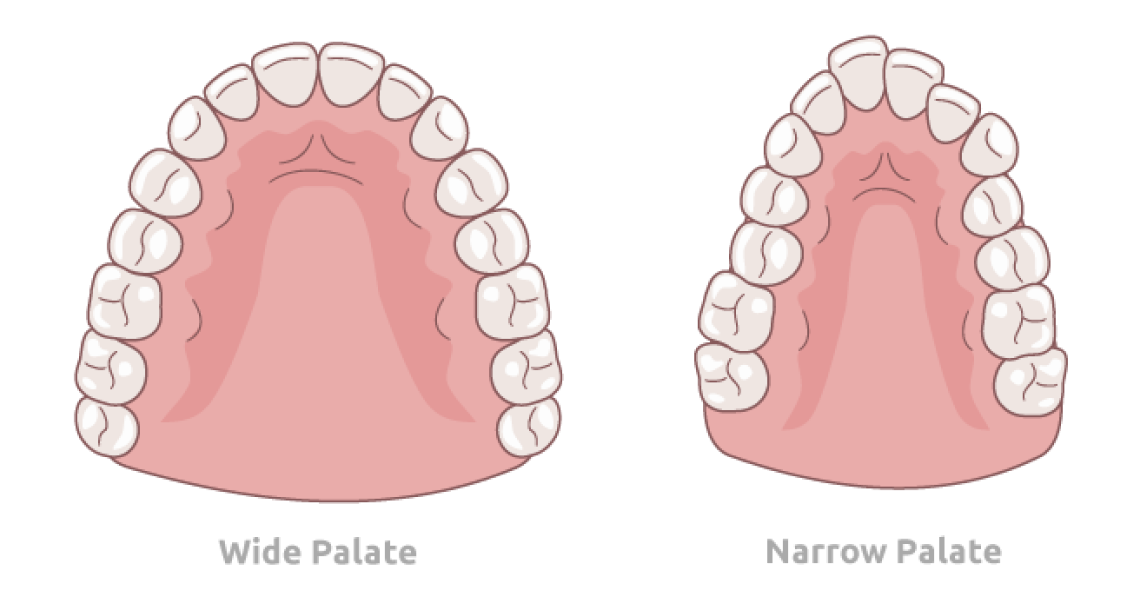
Your palate is the roof of your mouth, and it plays a crucial role in everything from how you breathe and speak to how your teeth align. A narrow palate occurs when the upper jaw (maxilla) doesn't develop to its full width, creating a high, vaulted roof of the mouth that's narrower than it should be.
Think of your upper jaw as the foundation for your upper teeth. When that foundation is too narrow, there simply isn't enough room for all your teeth to fit comfortably. This leads to crowding, overlapping, and in many cases, a crossbite where your upper teeth sit inside your lower teeth rather than outside them.
The effects extend beyond just your smile. A narrow palate can restrict your nasal passages, making it harder to breathe through your nose. Many patients don't realize that chronic mouth breathing, snoring, or even sleep apnea can be connected to the width of their palate.
Recognizing Narrow Palate Symptoms
How do you know if you have a narrow palate? While a proper diagnosis requires an examination from a dental professional, there are several signs that commonly indicate this condition. You might notice crowded or overlapping upper teeth, difficulty breathing through your nose, or a tendency to breathe through your mouth, especially at night.
Many patients with narrow palates experience frequent headaches, particularly tension headaches that seem to originate around the temples or behind the eyes. Some report jaw pain or TMJ issues, as the misaligned bite creates strain on the jaw joints. Speech problems, including difficulty pronouncing certain sounds, can also be linked to palatal anatomy.
There's also the facial appearance to consider. A narrow palate can affect your facial profile, sometimes creating a longer, narrower face or less prominent cheekbones. Your smile may appear narrower, showing fewer teeth when you grin, or you might notice dark corridors, those shadowy spaces at the corners of your mouth when you smile.
How a Narrow Palate Affects Your Face and Overall Health
The connection between your palate width and facial aesthetics is significant. Because your upper jaw forms the foundation of your mid-face, its width directly influences how your cheekbones appear, how your nasal passages function, and even how your eyes are spaced. A well-developed, adequately wide palate supports a balanced, harmonious facial structure.
Beyond aesthetics, a narrow palate can contribute to several health concerns. Restricted nasal airways often lead to mouth breathing, which can cause dry mouth, increased risk of cavities and gum disease, and even changes to your facial development over time. Sleep-disordered breathing, including obstructive sleep apnea, has been linked to narrow palatal structures in numerous studies.
For Canadian patients dealing with chronic sinus issues, recurring ear infections, or persistent snoring, it's worth investigating whether palatal width might be a contributing factor. Addressing the underlying structural issue can sometimes resolve symptoms that have persisted for years despite other treatments.
Can a Narrow Palate Be Fixed in Adults?
One of the most common questions we hear at Chagger Dental is whether adults can still have their narrow palate corrected. The encouraging answer is yes, though the approach differs from what we use for children and adolescents.
In children and teenagers, the palate hasn't yet fused completely. The midpalatal suture, the joint running down the centre of your palate, remains flexible until roughly the late teens to early twenties. This allows traditional palate expanders to work by gradually separating this suture and encouraging new bone growth.
For adults, the suture has typically fused, meaning a different strategy is required. Modern dental and orthodontic techniques have developed several effective options for adult palatal expansion, though they often involve more comprehensive treatment planning.
Treatment Options for Narrow Palate
Palatal Expanders for Children and Teens
For younger patients whose palatal suture hasn't fused, traditional rapid palatal expanders (RPE) remain the gold standard. These devices attach to the upper molars and apply gentle, consistent pressure to widen the upper jaw over several weeks or months. Treatment is most effective between ages 7 and 14, though it can work well into the late teens for some patients.
The expansion process involves activating a small screw in the device daily or every few days, following your dental professional's specific instructions. Most children adapt quickly, and the results, more room for permanent teeth, improved breathing, and enhanced facial development, are often remarkable.
Surgically Assisted Palatal Expansion (SARPE)
For adults with significant narrowing, surgically assisted rapid palatal expansion (SARPE) may be recommended. This procedure involves an oral surgeon making small cuts in the maxillary bone to release the fused suture, allowing a palatal expander to then widen the jaw. While it sounds intensive, the surgery is typically performed on an outpatient basis, and recovery is generally straightforward.
SARPE offers adults the same kind of skeletal expansion that children achieve naturally with traditional expanders. The bone-supported expansion creates lasting changes to jaw width, improves nasal breathing, and provides the foundation for comprehensive orthodontic treatment.
Miniscrew-Assisted Rapid Palatal Expansion (MARPE)
A newer, less invasive option gaining popularity in Canada is miniscrew-assisted rapid palatal expansion (MARPE). This technique uses temporary anchor devices (TADs) placed in the palate to support the expansion forces. For some adult patients with less severely fused sutures, MARPE can achieve skeletal expansion without traditional surgery.
The success of MARPE depends on factors including the patient's age, bone density, and degree of suture fusion. A thorough evaluation, often including cone-beam CT imaging, helps determine whether this option is suitable for your specific situation.
Does Invisalign Fix a Narrow Palate?
Many patients ask whether Invisalign can address their narrow palate. While Invisalign is an excellent tool for straightening teeth and correcting certain bite issues, it works primarily by moving teeth within the existing bone structure. It cannot widen the actual skeletal foundation of your palate.
That said, Invisalign can be part of a comprehensive treatment plan. After palatal expansion creates adequate width, Invisalign might be used to fine-tune tooth positions and achieve optimal alignment. The key is understanding that true palatal width issues require skeletal changes, which clear aligners alone cannot accomplish.
How Painful Is a Palatal Expander?
Understandably, many patients, and parents of young patients, worry about pain during palatal expansion. The honest answer is that some discomfort is normal, but it's typically manageable and temporary.
During active expansion, you may feel pressure across the palate, behind the nose, and around the cheekbones. Some patients describe it as a mild aching sensation that lasts a few minutes to a few hours after each activation. Over-the-counter pain relievers like ibuprofen usually manage any discomfort effectively.
Speech may feel different initially, and eating might require some adjustment during the first week or two. However, most patients, children and adults alike, adapt quickly and report that the temporary discomfort is well worth the lasting benefits.
How Much Does Palatal Expansion Cost in Canada?
Treatment costs vary depending on the type of expansion needed, the complexity of your case, and your location within Canada.
Adult treatments involving SARPE or MARPE are more complex and consequently more expensive, depending on whether surgical intervention is required. Many dental insurance plans cover a portion of orthodontic treatment, including palatal expansion, so it's worth checking your coverage.
At Chagger Dental, we believe that effective treatment should be accessible. We offer detailed treatment estimates during consultation and can discuss payment options to help make your care manageable.
Can You Naturally Widen Your Palate?
The internet is full of suggestions for naturally widening your palate, tongue exercises, mewing techniques, and various DIY approaches. While proper tongue posture (resting your tongue against the roof of your mouth) can support healthy oral development in children, there's limited evidence that adults can achieve significant skeletal changes through these methods alone.
Myofunctional therapy, which addresses tongue position, breathing patterns, and oral muscle function, can be a valuable complement to orthodontic treatment. However, if you have a genuinely narrow palate causing functional problems, professional evaluation and treatment remain the most reliable path to meaningful improvement.
We encourage patients to be cautious about claims promising dramatic results from exercises alone. While good oral habits support overall health, structural skeletal issues typically require professional intervention.
What Happens If You Don't Get a Palate Expander?
Leaving a narrow palate untreated doesn't mean your jaw will spontaneously expand, the condition typically remains or worsens over time. Crowded teeth become more crowded, breathing difficulties may progress, and associated issues like TMJ dysfunction or sleep apnea can develop or intensify.
For children, early intervention is particularly valuable. Addressing a narrow palate while growth is still occurring is simpler, less invasive, and often less expensive than waiting until adulthood. The Canadian Association of Orthodontists recommends that children have an orthodontic evaluation by age 7 to catch issues like narrow palates early.
That said, it's never too late to seek treatment. Adult patients regularly achieve excellent outcomes, even if the process requires more comprehensive intervention than it would have in childhood.
Is a Narrow Palate Related to Tongue-Tie?
There is indeed a connection worth understanding. Tongue-tie (ankyloglossia) restricts tongue movement, which can affect how the tongue rests against the palate during development. Since proper tongue posture helps shape the palate during childhood, restricted tongue movement may contribute to palatal narrowing.
If you or your child has both a tongue-tie and a narrow palate, addressing both conditions as part of a coordinated treatment plan often yields the best results. A tongue-tie release combined with myofunctional therapy can help establish proper tongue function that supports palatal expansion.
What's the Best Age for a Palate Expander?
The ideal window for traditional palatal expansion is typically between ages 7 and 14, when the midpalatal suture remains unfused and responsive to expansion forces. Treatment during this period is generally simpler, faster, and more predictable.
However, "ideal" doesn't mean "only." Teenagers in their late teens can still benefit from expansion, and as we've discussed, adult options exist for those who missed early treatment. The best age for your palate expander is whenever you decide to address the issue, earlier is easier, but later is still possible.
Taking the Next Step at Chagger Dental
If you've recognized yourself in this article, whether you're struggling with crowded teeth, breathing issues, or simply want to improve your smile, we invite you to schedule a consultation at Chagger Dental. Our team has extensive experience evaluating palatal width and developing customized treatment plans for Canadian patients of all ages.
During your consultation, we'll conduct a thorough examination, discuss your symptoms and goals, and explain which treatment options make sense for your specific situation. Whether you need early intervention for your child or are exploring adult expansion options for yourself, we're here to guide you through every step.
A narrow palate doesn't have to limit your health, your breathing, or your confidence in your smile. Contact Chagger Dental today to learn how we can help you achieve the lasting results you deserve.
Frequently Asked Questions About Narrow Palate
What does it mean to have a narrow palate?
A narrow palate means the roof of your mouth (upper jaw) hasn't developed to its full width, creating a high, vaulted appearance instead of a broad, U-shaped arch. This leads to crowded or overlapping teeth, crossbite (upper teeth sitting inside lower teeth), and restricted nasal passages.
It can cause breathing difficulties, mouth breathing, snoring, headaches, and even affect your facial appearance; creating a narrower face, less prominent cheekbones, and a smile showing fewer teeth.
Can you fix a narrow palate?
Yes, narrow palates can be fixed at any age, though the approach differs:
Children/teens (ages 7-14): Traditional palatal expanders (RPE) work best because the palatal suture hasn't fused yet. Treatment is faster and less invasive.
Adults: Two main options exist:
- SARPE (Surgically Assisted Rapid Palatal Expansion): Oral surgeon makes small cuts to release the fused suture, then an expander widens the jaw
- MARPE (Miniscrew-Assisted Rapid Palatal Expansion): Uses temporary anchors and may achieve expansion without surgery in some cases
Treatment improves breathing, tooth alignment, and facial aesthetics regardless of age.
Can I naturally widen my palate?
Not significantly, especially if you're an adult. While proper tongue posture (resting your tongue against the roof of your mouth) supports healthy development in growing children, it cannot create skeletal expansion in adults once the palatal suture has fused (typically by late teens/early twenties).
Bottom line: Myofunctional therapy can complement professional treatment but cannot replace it. For genuine narrow palate causing crowded teeth, breathing problems, or jaw pain, professional orthodontic intervention (expanders, MARPE, or SARPE) is the only proven, reliable solution.
How to test for a narrow palate?
Visual self-check (use a mirror):
- Crowded or overlapping upper teeth
- High, vaulted roof of mouth
- Upper molars sitting inside lower teeth (crossbite)
- Only 6-8 teeth visible when smiling (normal: 10-12)
- Dark shadows at corners of smile
Symptoms to watch for:
- Difficulty breathing through nose
- Chronic mouth breathing or snoring
- Frequent headaches (especially temples)
- Jaw pain or TMJ issues
- Speech difficulties
Professional diagnosis: If you have 3+ of these signs, schedule an evaluation with your dentist or orthodontist for X-rays, dental scans, and proper measurement.